Case Studies

Prescribing Care Direct offers their medicines management services to primary care organisations nationwide.
You can read about some of our success stories and see how some of PCDs clients have benefited from our managed clinical services.

Case Studies

Proven Results

PCD provides comprehensive clinical workforce solutions that reduce pressure on GP teams. Our case studies show how practices across the country have benefited from our expertise.

Case Studies

Clinical pharmacist services

Read how PCD was able to support a GP surgery with 9,000 patients using our medicines management solution.

Faster prescription turnaround

14 GP hours saved

Per week

Improved patient access

Case Studies

PCN services

Learn how PCD assisted a PCN comprising 75,000 patients through our PCN Services
Workforce fully built across 5 surgeries

7 FTE pharmacists + 2 ACPs across 7 surgeries

improving patient care network-wide

Extended access & medication reviews delivered

Case Studies

Gastro-Protection & Prescribing Safety

Learn how PCD helped a PCN serving 50,000 patients identify and protect high-risk individuals from GI harm through targeted gastro-protection.

The Problem

A Primary Care Network (PCN) serving 50,000 patients needed to urgently identify people at increased risk of gastrointestinal (GI) harm who were prescribed high-risk medicines without appropriate gastro-protection (PPI therapy). The project focused on three specific risk groups:
In total, 375 patients were identified as potentially requiring review to reduce avoidable GI risk and improve prescribing safety.

PCD’s Solution

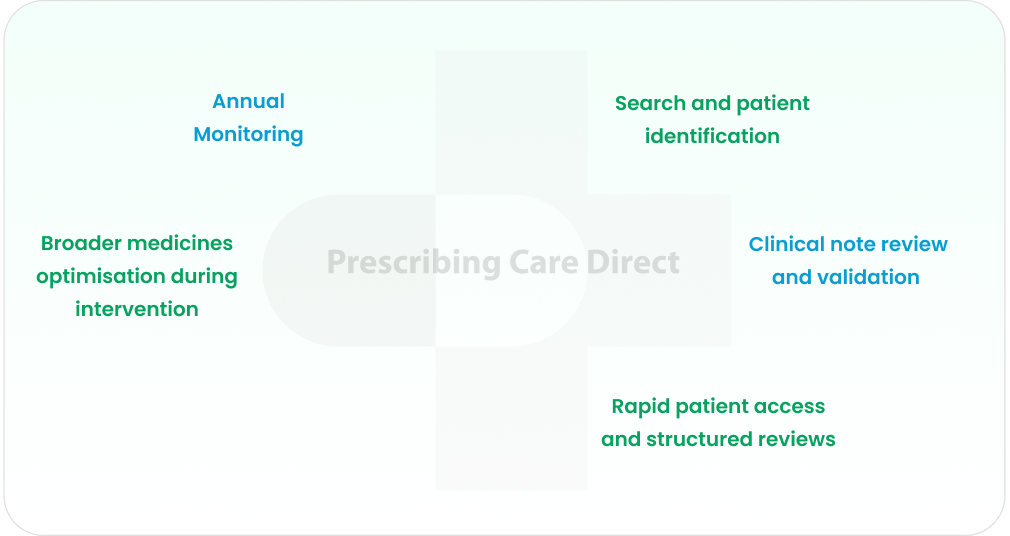
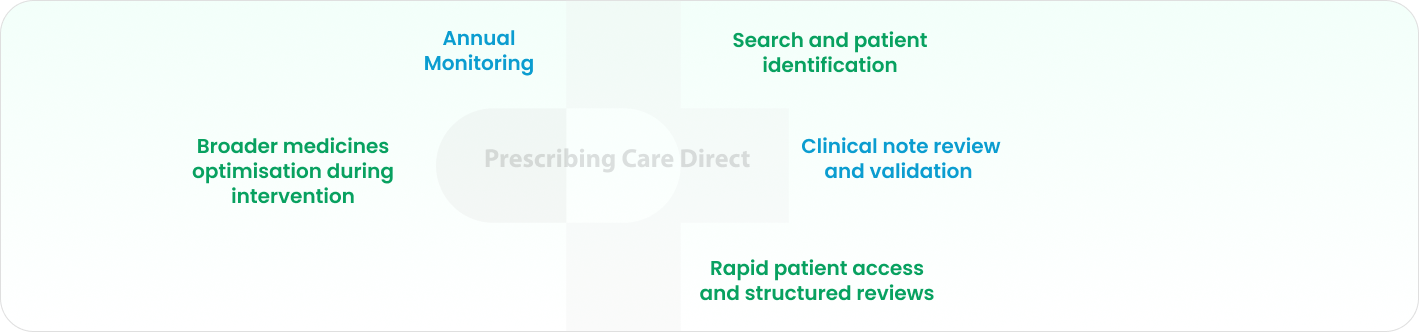
1. Create a search and patient identification

PCD created targeted clinical searches to accurately identify all patients meeting the agreed risk criteria. The search also excluded specific read codes including ‘Gastro-Protection not tolerated.’

2. Clinical note review and validation

Each patient record was reviewed to confirm suitability for intervention and to ensure recommendations were clinically appropriate.

3. Rapid patient access and structured reviews

Patients were then booked directly into medication reviews with the PCD practice pharmacist team. Within two weeks, PCD pharmacists contacted each patient and provided counselling on the need for gastro-protection and the intended benefits of therapy.

4. Broader medicines optimisation during intervent

While initiating gastro-protection where appropriate, PCD pharmacists also reviewed ongoing indications for antiplatelet therapy. As a result, dual antiplatelet therapy was stopped for 12 patients where it was no longer clinically indicated—improving safety and reducing unnecessary medication burden. The pharmacists identified 23 patients where gastro-protection was not tolerated and read-coded these patients for future identification.

5. Annual Monitoring

To ensure that good prescribing practice was maintained, the team decided to run the search annually and a training session was set with all prescribers to ensure that good prescribing practice was maintained.

6 Month Review

At the six-month follow-up, the PCN was able to confirm sustained outcomes:
✓ Adherence and continuation
Monitoring and ordering patterns demonstrated that patients remained on their prescribed PPI therapy at the six-month point.
✓ Improved understanding drives adherence
The consistency of ongoing PPI use suggested that clear counselling and education helped patients understand why gastro-protection was necessary and why it should be continued.

Conclusion

This project demonstrated that gastro-protection is essential for patient safety but is often overlooked in high-risk prescribing scenarios. By combining robust searches, clinical validation, rapid access reviews and high-quality patient counselling, PCD delivered a measurable impact quickly, sustained adherence at six months, and additional optimisation through deprescribing where appropriate.
If your practice or PCN needs support with prescribing safety or structured project work, PCD pharmacists can help. Our experience extends beyond gastro-protection and includes proven delivery across QOF, IIF and local KPI projects.

Key Outcomes

At the six-month follow-up, the PCN was able to confirm sustained outcomes:
Gastro-protection is not a “tick box” intervention — starting a PPI should be paired with a skilled review of the wider medication regimen to confirm that gastro-protection is the right approach.
Indications must always be checked — medicines optimisation opportunities can be uncovered during safety projects (as demonstrated by the appropriate discontinuation of dual antiplatelet therapy in 12 patients).
Patient counselling improves outcomes — when patients understand the purpose of gastro-protection, adherence improves and can be tracked through prescribing/ordering trends.

Interested in Similar Results?

Learn how PCD can help your practice improve efficiency and patient satisfaction.

Empowering Primary Care. Improving Lives.

Join hundreds of healthcare organisations who trust PCD to deliver reliable, patient-focused clinical support across the UK.